In the rapidly evolving landscape of advanced computation, enterprise networks are approaching the absolute physical limits of classical silicon architectures. As massive datasets, cryptographic systems, and deep-level molecular simulations exceed the processing thresholds of binary computers, global industries are seeking alternative frameworks. At the center of this computational evolution is the rise of high-performance quantum computing systems—integrated hardware platforms designed to leverage subatomic physics to resolve highly complex algorithmic challenges.
Structural Computational Shifts and the Rise of Scalable Processing
The corporate mandate for processing speed and optimization is driving financial institutions, defense agencies, and pharmaceutical developers to transition away from classical high-performance compute clusters. While binary systems rely on traditional on-off transistors, quantum networks utilize advanced technologies like superconducting qubits and trapped ions to perform multi-variable computations simultaneously.
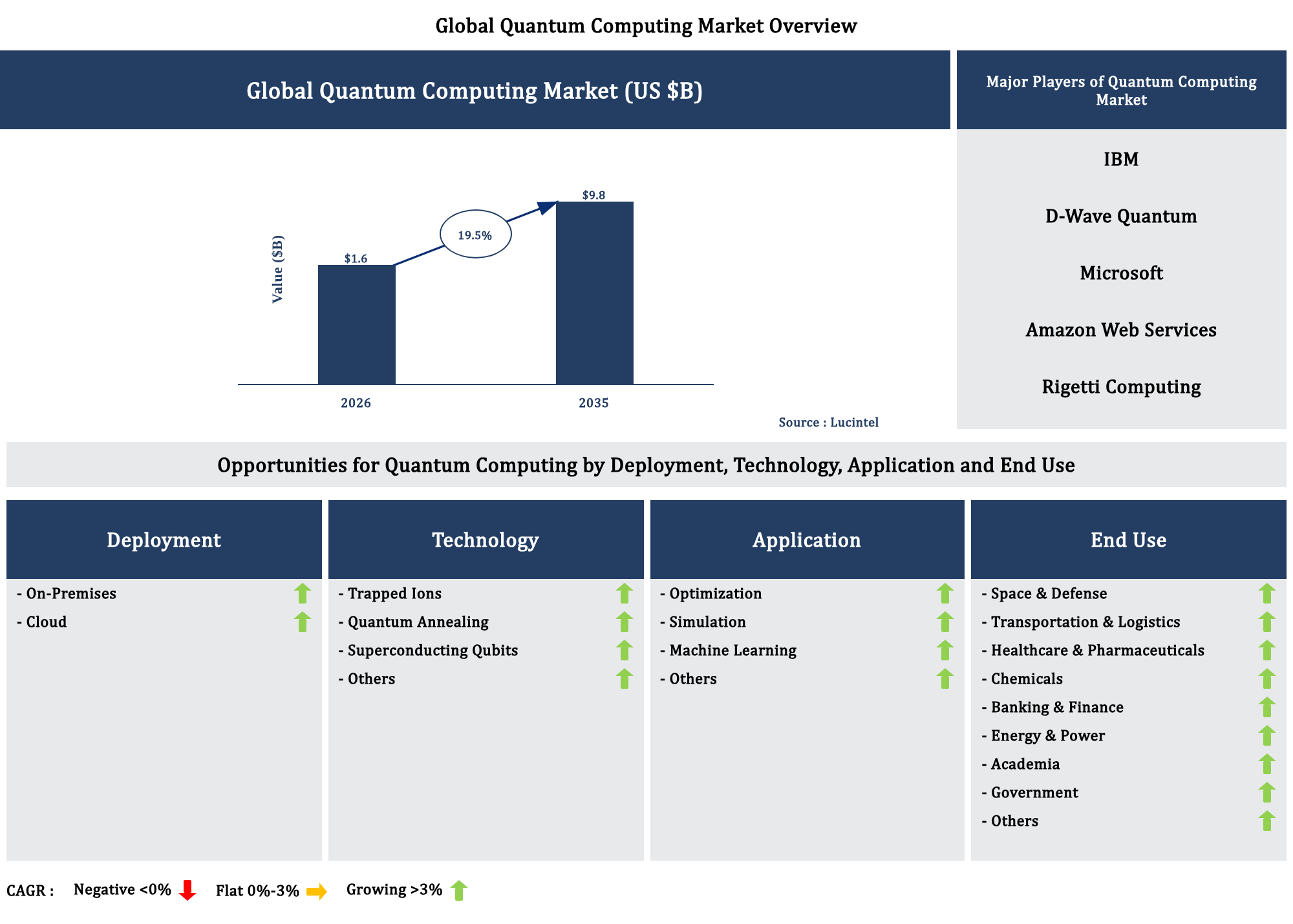
According to a detailed market tracking report from Lucintel, the global quantum computing market is projected to reach an estimated valuation of $$9.8text{ billion}$ by $2035$. This growth represents a highly robust compound annual growth rate ($text{CAGR of } 19.5%$) from $2026$ to $2035$, propelled by extensive public-private research partnerships and a critical demand for real-time risk modeling.
The strategic market intelligence report—spanning more than a $150text{-page}$ industry deep-dive—highlights several core technology and application-level dynamics:
- The Dominance of Cloud-Based Deployment: Within the deployment categories, cloud-based configurations are projected to witness the fastest growth rate as enterprises prioritize remote, scalable, and cost-effective access to physical quantum processors without the overhead of cryogenic cleanroom maintenance.
- Fintech Leads End-Use Integration: Within the end-use segments, banking and financial institutions continue to lead pilot programs, seeking to deploy quantum annealing and optimization algorithms for high-frequency trading, algorithmic risk analysis, and asset allocation modeling.
- The APAC Research Corridor: Asia-Pacific is positioned to sustain the highest growth rate over the forecast period, supported by heavy public funding and academic research grants aimed at building localized quantum computing hubs across developing commercial trade corridors.
Market Landscapes and Leading System Providers
The commercial infrastructure supporting quantum computing is highly consolidated, dominated by specialized hardware pioneers and global cloud-hosting tech conglomerates. Key suppliers actively leading engineering innovations and scaling quantum topologies include IBM, D-Wave Quantum, Microsoft, Amazon Web Services, Rigetti Computing, Fujitsu, and Hitachi.
As enterprise networks continue to implement complex artificial intelligence models and high-dimensional simulations, the integration of scalable, low-temperature quantum grids is transitioning from an experimental novelty into the primary backbone of next-generation digital architectures.
About Lucintel
Lucintel is an industry-leading global market research and strategic consulting firm. For over $20text{ years}$, Lucintel has empowered Fortune $1,000$ organizations with actionable growth strategies, market forecasts, and competitive analyses. Our research findings are regularly referenced across preeminent financial and business publications, including the Wall Street Journal, ZACKS, and the Financial Times.
Media and Research Inquiries:
- Corporate Contact: Roy Almaguer
- Corporate HQ: Dallas, Texas, USA
- Inquiries & Portals: To explore our extensive library of research across various industrial sectors, visit the Lucintel Industry Analytics Dashboard. .